Generators Beyond Backup Power: Unlocking More Value
Discover how commercial generators can deliver more than backup power through demand charge reduction, demand response, and capacity-related savings.

Discover how commercial generators can deliver more than backup power through demand charge reduction, demand response, and capacity-related savings.
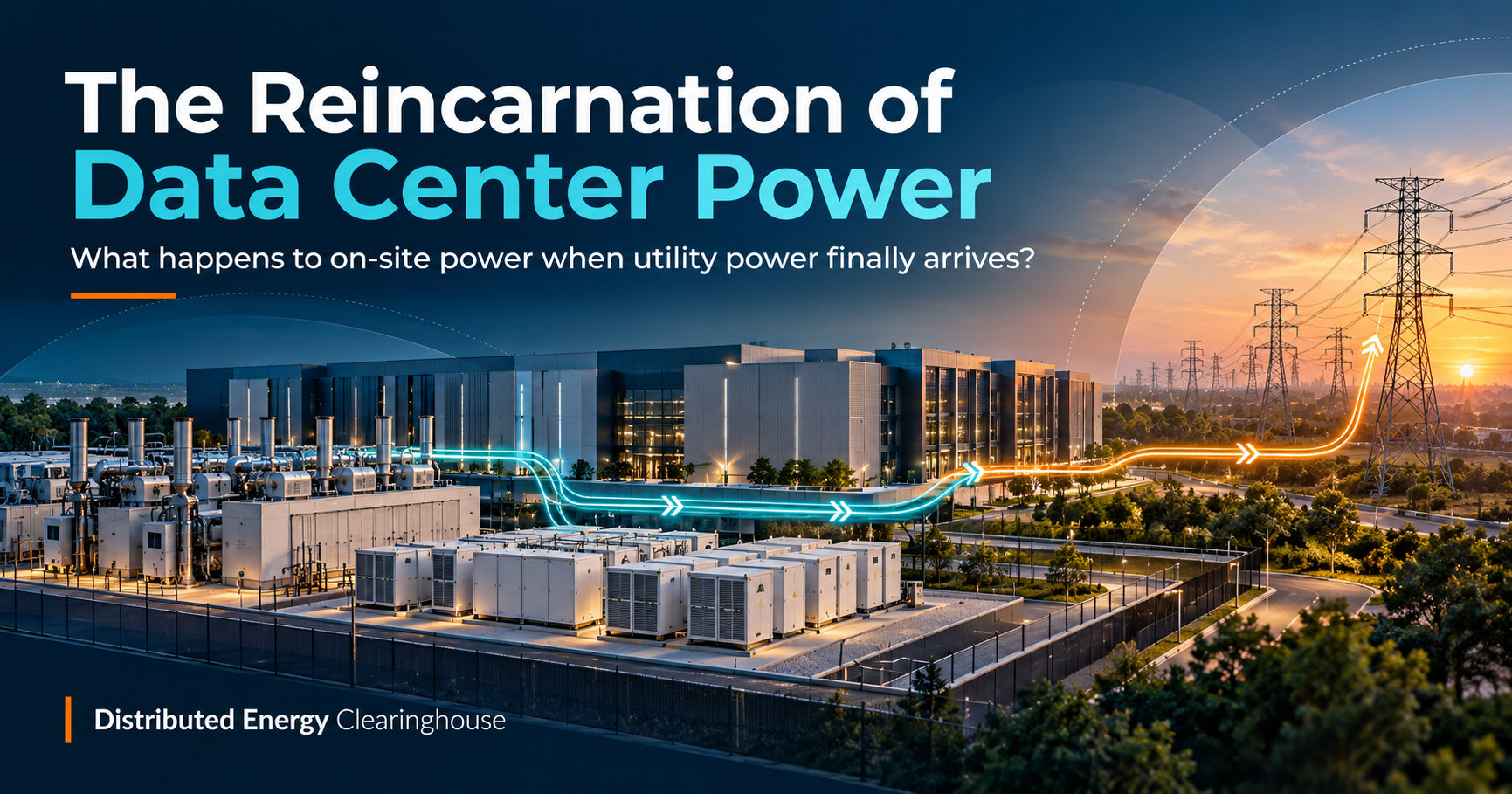
What happens to data center on-site power when the grid arrives? Explore second-life strategies for generators, batteries, and long-term asset value.
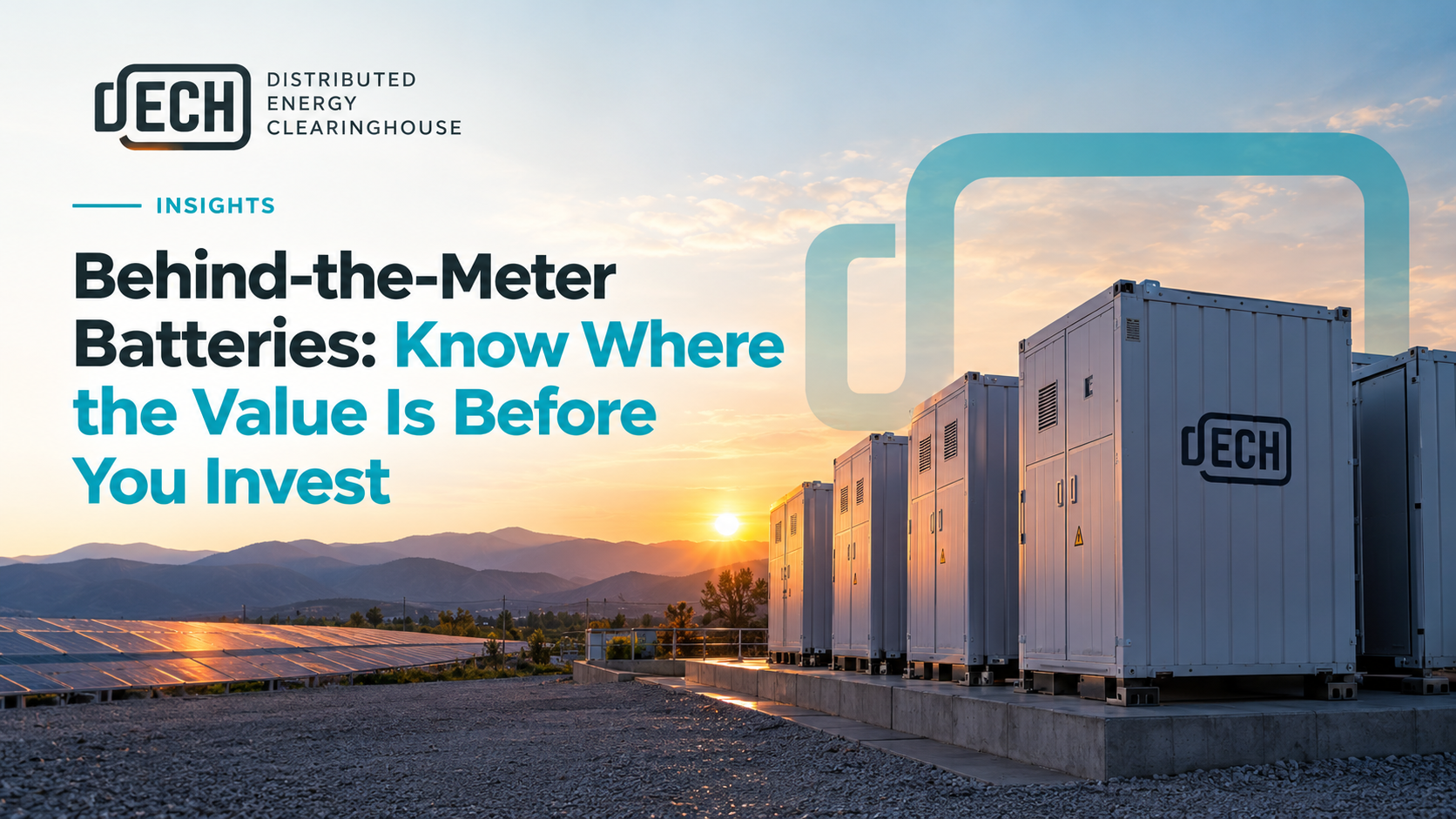
Learn where behind-the-meter battery value comes from, how revenue streams interact, and what C&I customers should evaluate before investing.
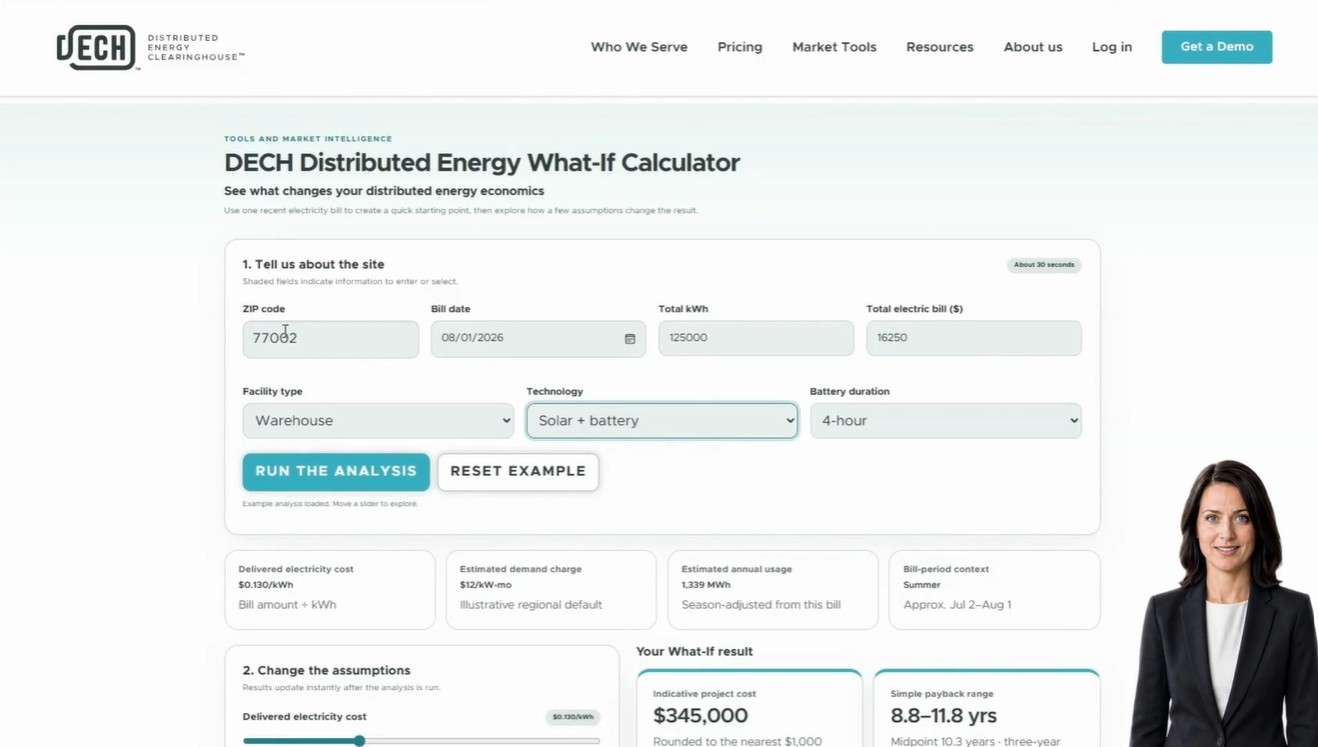
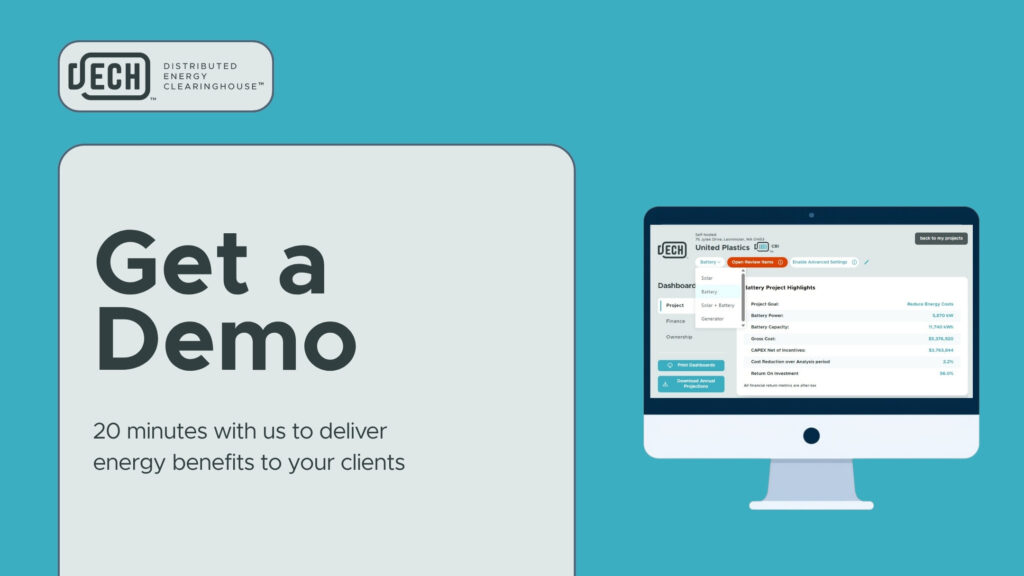
See how the DECH What-If Calculator helps you explore how energy prices, demand charges, technology costs, and usage affect distributed energy economics.
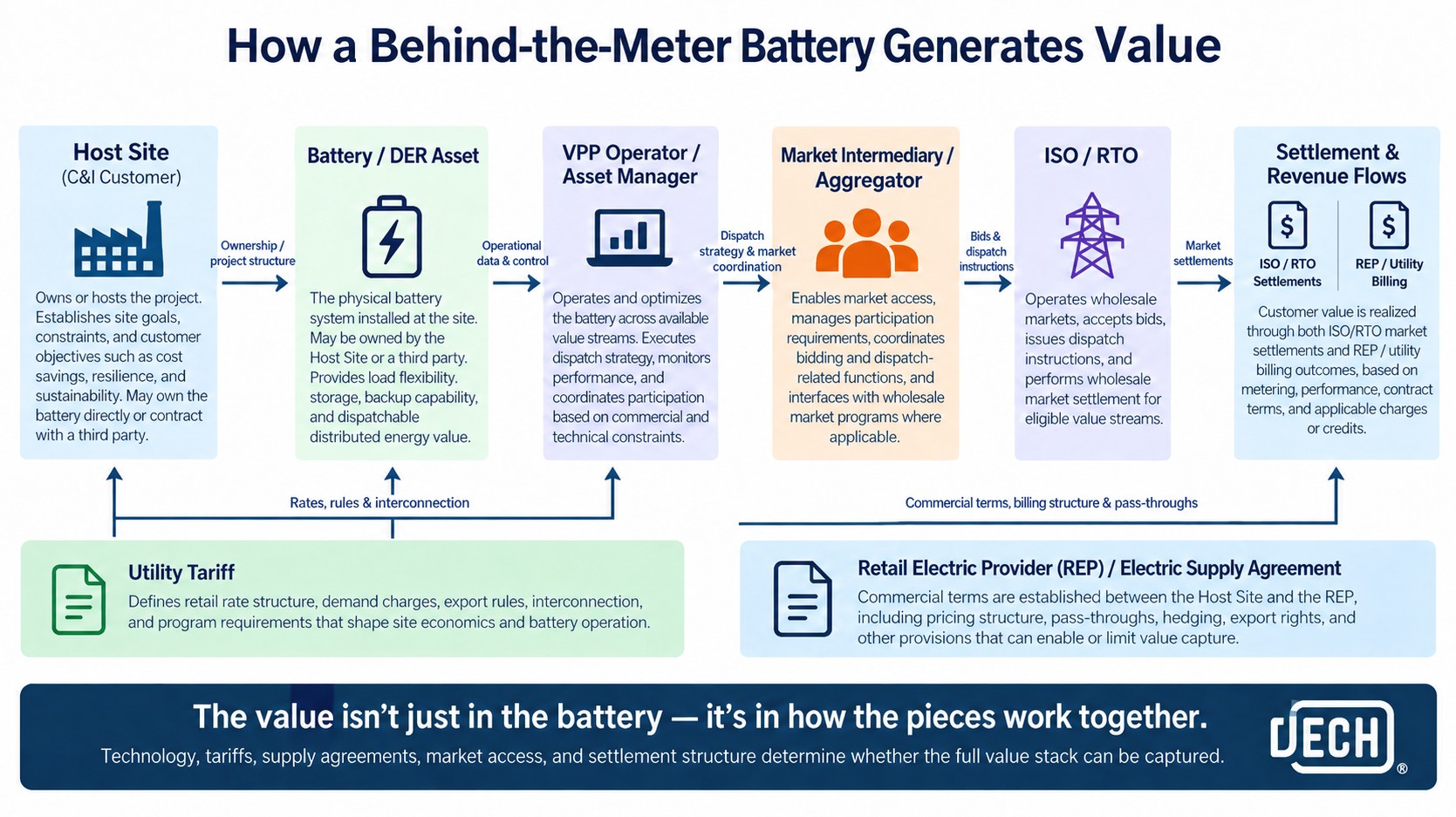
I want to talk about batteries today. We're getting a lot of activity around batteries, a lot of inquiries, including inquiries from those of you who sell batteries.
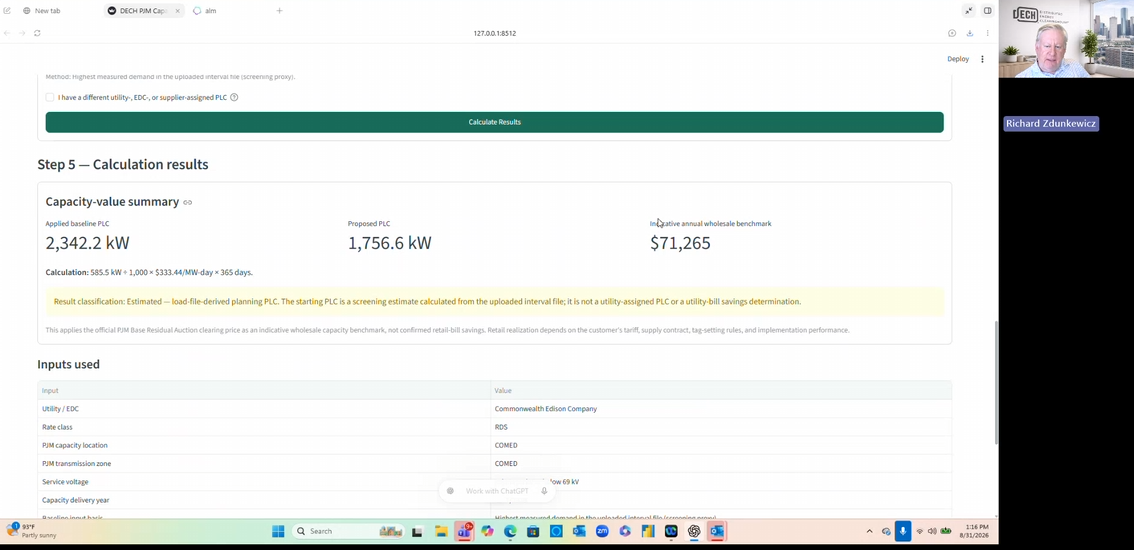
When we were creating Distributed Energy Clearinghouse, we built that platform kind of module by module. One of the modules we created was something that would really get a tight estimate of capacity charges.
According to Lawrence Berkeley National Lab, at the end of 2025, more than 2,000 gigawatts of proposed generation and storage were actively seeking connections to the grid.
Distributed energy opportunities are relatively easy to identify. The harder part is determining which ones are strong enough to justify deeper engineering, development, financing, and capital allocation.
Battery energy storage creates value through much more than energy arbitrage. Learn the four primary drivers of battery ROI, including utility bill savings, grid services, incentives, and resilience, and why coordinating these value streams is essential to maximizing project economics.