
The electricity demand of a single large data center can rival that of a small city. As AI workloads, cloud platforms, and digital infrastructure grow faster than many anticipated, data centers’ energy use has become a key challenge for power grids nationwide.
In fact, a 2024 report from the U.S. Department of Energy revealed that data centers consumed about 4.4% of total U.S. electricity in 2023, and this is expected to reach approximately 6.7% to 12% by 2028.
Business leaders in real estate, energy, and technology now face an urgent issue: will the existing grid infrastructure be sufficient, and if not, what happens next?
Why Data Centers Energy Usage Is Rising So Quickly
All things digital now demand more power than ever before, and demand is accelerating across multiple fronts simultaneously.
For example, AI model training and inference are particularly power-intensive. Running large language models or processing real-time video analysis requires sustained, high-density computing that older data center designs were never built for.
Where a legacy server room might draw anywhere from two to four megawatts, a modern hyperscale facility could require hundreds of megawatts from a single campus.
Streaming services, enterprise cloud migrations, and the proliferation of Software as a Service (SaaS) Platforms have added to the load on AI-driven demand.
The additional load competes with the same power supply, grid interconnection, and Physical Real Estate. Geographic clustering compounds this: when multiple large facilities concentrate in the same region, local grids absorb a disproportionate share of new load, and traditional grid expansion cannot match that pace.
How Data Center Growth Is Affecting Grid Stability and Capacity Planning
Grid operators and utilities are under strain that extends beyond mere capacity calculations. Transmission infrastructure and substations meant to accommodate steady, predictable load increases are now expected to serve sudden, massive new demands.
The Lawrence Berkeley National Laboratory (LBNL) now reports that the U.S. grid interconnection queues are at an all-time high, with over 2,600 GW of capacity in line, waiting for connections. Projects now face median wait times of nearly five years.
One hyperscale tenant can introduce hundreds of megawatts of load in the months following the lease agreement, which isn’t easy to facilitate when grid-expansion regulatory proceedings unfold on a different planning horizon than real estate development.
Grid congestion in specific areas, overloaded transformers, and issues related to carrying capacity, reliability, and aging infrastructure all pose a threat to operators and the communities sharing the same grid. This is why resilient infrastructure must be part of your strategy.
The Reliability Expectations of Modern Data Centers
Power outages are more than just a small inconvenience for data center operators. A brief interruption lasting just a few seconds can trigger a series of failures, leaving companies vulnerable to millions in financial losses.
Most enterprise-level data centers aim for 99.999% uptime, which equates to less than 6 minutes of downtime per year. But achieving this goal becomes harder when you depend entirely on grid power from a centralized source. Power lines go down, substations need maintenance, and large-scale weather events can disrupt the power supply.
When operational standards leave little room for error, or in this case, interruptions, relying on a single external power source poses a variety of risks.
Why On-Site Generation and Microgrids Are Becoming Essential
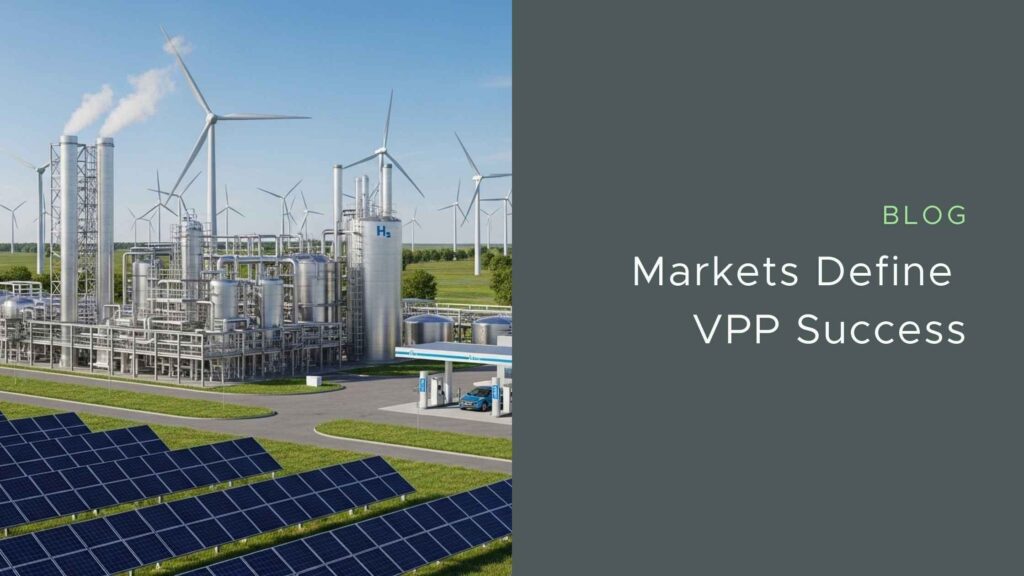
When we think about large data centers, having local generation coupled with smart energy control becomes more than just a plan B; it’s a strategic part of the infrastructure.
A microgrid enables a site to generate and manage its electricity, with the added benefit of disconnecting from the main grid when it’s beneficial to do so. This could be in the case of a grid event, enabling the building to ‘island’ and keep running.
When paired with distributed energy resources such as small generators, owners can better control their energy costs and reduce their exposure to wholesale electricity pricing. They offer the reliability and firm capacity that a system 100% dependent on renewables can’t guarantee.
What makes distributed energy resources (DERs) even more powerful is what is underlying them: data. DER data, such as real-time monitoring, load predictions, and performance analytics, enable microgrids to respond dynamically rather than just reactively.
Renewable Energy, Data Analytics, and the Full Financial Picture
Commitments to corporate sustainability have advanced far beyond mere marketing. Some of the largest data center operators have publicly promised to obtain enough renewable energy to equal or exceed the total power they use.
Investors, authorities, and cloud clients expect the same performance. For example, Microsoft recently announced that it had successfully achieved its 2025 goal of matching 100% of its electricity consumption with renewable energy across all data centers, buildings, and campuses.
Solar energy paired with battery storage and hybrid generation systems now offers a practical path to meeting both sustainability and reliability goals. Still, data analytics remains the key to unlocking the full financial benefits of your renewable and distributed energy resources.
By monitoring generation patterns, demand curves, market pricing signals, and storage state in real time, operators can determine the optimal time to draw from storage, export to the grid, or activate backup generation.
This intelligence layer functions as a renewable energy system, shifting it from a cost center to a managed financial asset, and it can even generate revenue through demand response programs, capacity markets, and ancillary services.
The Future of Data Centers, Energy, and What It Means for Infrastructure Planning
The future of data center energy will not resemble its past. Further expansion of AI and digital services is expected to increase electricity demand until at least the early 2030s. The necessity for decentralized, flexible energy systems hinges on the design parameters of data centers.
Greater collaboration among utilities, developers, and energy suppliers is already underway in locations with the most severe grid constraints. The grid alone won’t be enough to power the energy-use trajectory that data centers will soon be on.
Organizations that make energy decisions based on resilient, data-enabled, distributed infrastructure today will be better prepared to scale, meet their sustainability obligations, and keep the lights on.