

Understanding the PJM DER Value Stack – Part I
How transmission, utility delivery, capacity, and ancillary services influence distributed energy value in PJM.
Transmission
Utility Delivery
Capacity
Ancillary Services
This is the first of two parts in DECH’s assessment of the PJM Market and Distributed Energy Resources.
Increasingly efficient technologies and electricity costs that customers can actively control are making distributed energy resources more valuable. Transmission and delivery cost reductions remain important, while evolving technologies and market rules are opening additional opportunities.
In Our Assessment
Reducing transmission and utility delivery charges.
Opportunities in qualifying ancillary-service markets.
Operational needs determine which opportunities are practical.
Maximizing value can require more sophisticated design.
Market signals and controls support value realization.
Flexible participation across multiple value streams.
Transmission
Transmission charges are often associated with a customer’s peak load contribution, or PLC. This demand measure helps determine the transmission capacity assigned to a customer for a subsequent billing period.
Reducing demand during the relevant system peak periods can lower future transmission exposure. The opportunity varies by utility territory and applicable methodology.
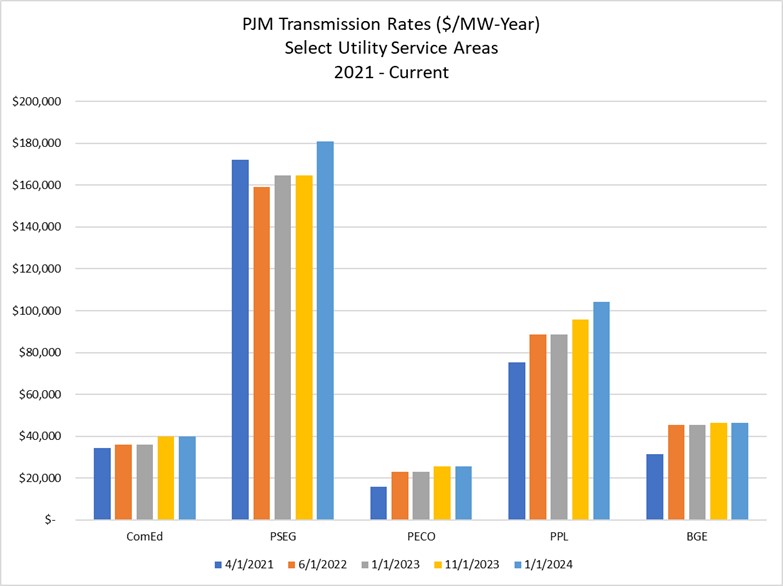
Transmission cost exposure can differ substantially from one PJM utility territory to another.
Utility Delivery
Commercial and industrial customers pay delivery charges according to their applicable utility rate schedules. These charges may depend on electricity demand, consumption, or both.
In competitive electricity markets, delivery and supply costs are treated separately. Managing load or using distributed generation can help reduce certain demand-related charges.
Determined by the utility’s approved tariff structure.
Electricity procurement costs under applicable supply arrangements.
Manage demand through load controls or on-site resources.
Capacity
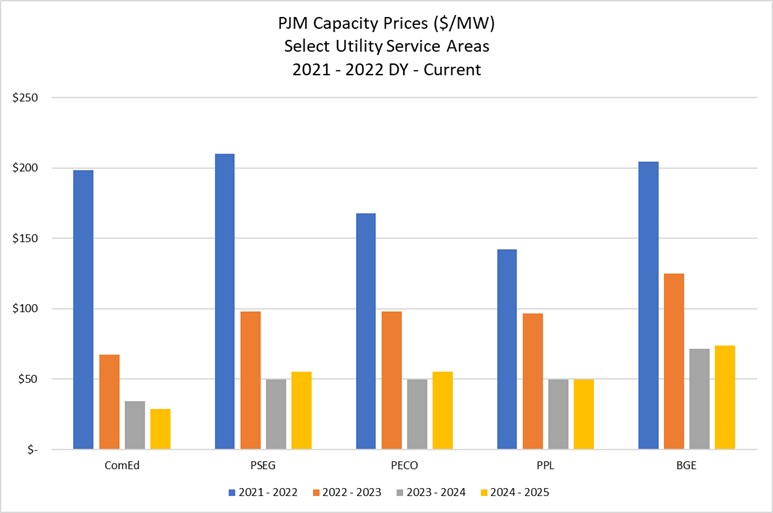
PJM’s capacity market supports long-term reliability by securing resources expected to meet future electricity demand. Participating resources include generation, demand response, efficiency, and certain infrastructure improvements.
Distributed energy has long had a role in capacity-related programs, although resource qualification and compensation depend on the market rules.
Ancillary Services
PJM ancillary services include regulation and reserve products that help maintain reliable system operations.
Reserve products differ in their response requirements. Regulation resources respond to control signals, while reserve resources must meet the applicable availability and activation requirements.
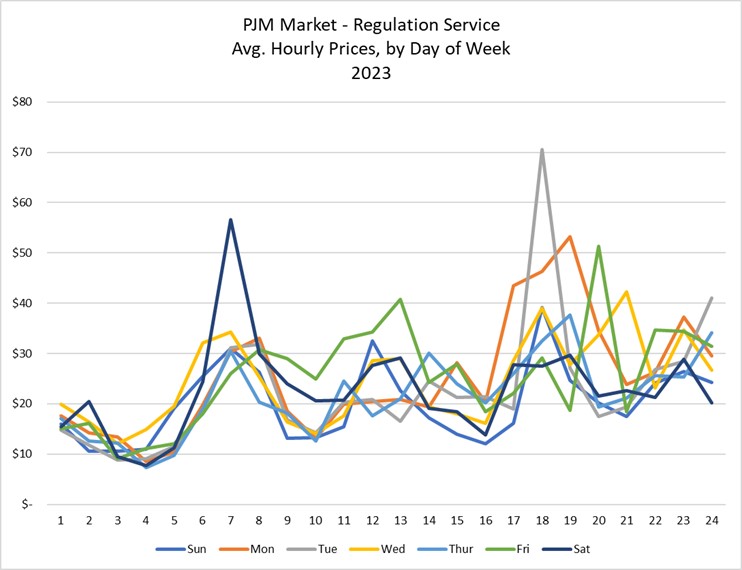
DER eligibility for ancillary services depends on technical configuration, operational requirements, and the needs of the host facility.
Looking Ahead to Part II
Battery storage is especially interesting because it can support multiple parts of the DER value stack while offering different operating characteristics from conventional generators.
Part II examines battery energy arbitrage and ancillary-service opportunities in greater detail.
Historical sources: PJM, ComEd, PSEG, PECO, PPL, and BGE.
Evaluate the Full PJM Value Stack
Understand how tariff savings, capacity, and market-based opportunities influence distributed energy economics.